How did a needless war become Trump's gravest economic mistake?
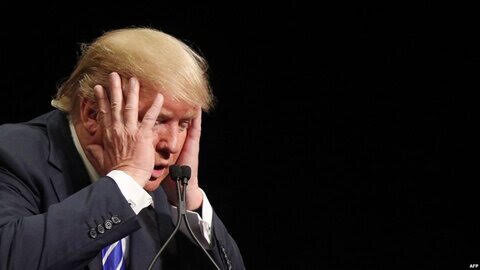
TEHRAN- As the United States hurtles toward midterm congressional elections with less than four months remaining, a damning portrait emerges of an administration in freefall—one that has transformed cautious economic optimism into a self-inflicted catastrophe through reckless military adventurism.
According to a comprehensive analysis by The New Yorker and subsequent reporting, President Donald Trump's decision to bomb Iran has not only destabilized the West Asia but has systematically dismantled the very economic foundations that secured his 2024 electoral victory. What began as a summer of celebration—complete with UFC fight nights at the White House and turquoise carpets in Turkey—has descended into a nightmare of soaring prices, stagnant growth, and plummeting public confidence.
From economic promise to self-inflicted disaster
At the dawn of 2026, the Trump administration appeared to be riding a wave of cautious optimism. Despite widespread fears that his blanket tariffs would trigger a recession, the U.S. economy had demonstrated surprising resilience. GDP grew at a respectable 2.1% in 2025, and inflation in January stood at a manageable 2.4%—barely above the Federal Reserve's target. Artificial intelligence investments were fueling stock market records, with technology giants pouring billions into chips, servers, and software. In the first quarter alone, these expenditures added approximately 1.3 percentage points to annualized GDP growth. Seasoned economists like Joseph LaVorgna, then a Treasury Department counselor, spoke confidently of "very strong disinflationary growth" on national television.
Yet this optimism, as the reports devastatingly document, rested on the thinnest of foundations—and was obliterated entirely by Trump's reckless decision to coordinate with Israel in bombing Iran. The consequences were immediate and catastrophic: crude oil prices skyrocketed from roughly $70 to over $110 per barrel, while average gasoline prices nationwide surged from under $3 to $4.50 per gallon. Fertilizers, plastics, and countless other petroleum-dependent products saw their costs spiral upward. In a single stroke, Trump transformed an economy showing genuine promise into a landscape of hardship for millions of American families.
The reports quote LaVorgna, who left the administration in March, describing this as a "self-induced supply shock"—a stunning indictment of presidential incompetence. "The problem is this war," he told CNBC bluntly. "From a forecasting perspective, it changed things, and changed things monumentally." This is not the language of partisan criticism; it is the sober assessment of a veteran Wall Street economist who served in the very administration he now condemns.
Desperate distractions and hollow deflections
The human cost of Trump's folly is written in the stark statistics of public opinion. According to recent polling data, only 32% of Americans approve of his economic performance, with his inflation-handling approval sinking to an abysmal 27%. A Harris poll reveals that 57% of respondents believe the economy is worsening—not improving. Even among self-identified Republicans, barely a quarter express optimism. These figures represent nothing less than a political death spiral for a president who rode the cost-of-living crisis to victory just two years prior.
The reports painfully illustrate how Trump's attempts at distraction have only deepened his humiliation. The sudden emergence of "Freedom Fuel" stations in Philadelphia—offering discounted gasoline through mysterious benefactors—represents a pathetic attempt to manufacture good news. Even the White House has been forced to deny involvement, suggesting this initiative may be the work of panicked donors or supporters desperately trying to salvage an increasingly hopeless situation. Similarly, Trump's Red Scare tactics—branding Democrats as "communists" at the nation's 250th anniversary celebration—reveal a leader with no substantive answers, only hollow rhetoric from the last century.
Perhaps most damning is the administration's frantic diplomatic maneuvering with Iran. After initiating a war that destabilized global energy markets, Trump was forced to negotiate a conditional ceasefire and memorandum of understanding to reopen the Strait of Hormuz. When that fragile agreement collapsed, gasoline prices immediately began climbing again—exposing the profound instability that his impulsive decision-making has unleashed. Even before the latest price increases, Trump had been reduced to complaining publicly that gas prices hadn't fallen as much as oil prices, accusing major companies of price gouging. This is not leadership; it is the desperate flailing of a commander-in-chief who cannot control the consequences of his own actions.
The economic damage extends beyond the gas pump. The Federal Reserve, constitutionally mandated to ensure price stability, now faces the prospect of raising interest rates—the very policy Trump had hoped to avoid. Nine of eighteen Fed policymakers anticipate at least one rate hike by year's end, a development that would further burden American families with higher borrowing costs. Even Kevin Warsh, the Republican financier handpicked by Trump to chair the central bank, has publicly acknowledged the need to contain inflation. When even your own appointees concede the gravity of the crisis, the pretense of competence collapses entirely.
What makes this tragedy particularly unforgivable is its avoidability. The crisis of affordability that propelled Trump to victory in 2024—the very issue he promised to solve—has been exacerbated by his own policies. Heavy tariffs on imported goods and a needless war have inflicted suffering on the very working-class Americans who placed their trust in him. The "futile war" with Iran, as the news agency report accurately characterizes it, represents not a necessary defense of American interests but a reckless gamble that has backfired monumentally.
As the Bureau of Labor Statistics prepares to release its June Consumer Price Index—expected to show inflation falling below 4% due solely to temporary gas price declines—Trump may attempt to claim a hollow victory. But ordinary Americans know better. They are not fooled by one-month fluctuations; they see grocery prices that remain painfully high, essential goods that continue to strain household budgets, and a president who seems more interested in hosting UFC matches and branding opponents as "communists" than in addressing their daily struggles.
The verdict is clear and damning: Donald Trump's needless war with Iran stands as his most profound economic blunder—a self-inflicted wound that has betrayed the trust of the American people and exposed the dangerous emptiness of his leadership.
Leave a Comment